Why Luxury Travel Feels Different in 2026
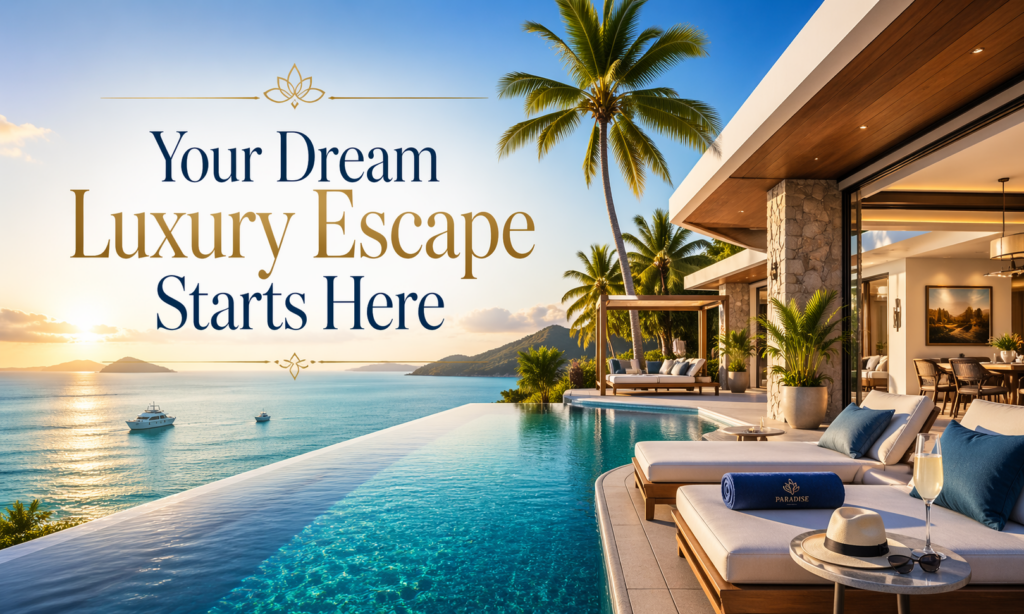
(Your Dream Luxury) A luxury escape is no longer just about booking the most expensive suite in the building and calling it a day. The modern traveler wants something richer than that. They want time that feels protected, service that feels intuitive, and experiences that feel like they were designed around real human desires rather than a glossy brochure. That shift matters because the whole meaning of luxury travel has changed. Skift’s 2025 luxury travel analysis describes this new definition as more intentional, with affluent travelers valuing privacy, emotional connection, space, wellness, and a strong sense of place over flashy status symbols.
McKinsey reaches a similar conclusion, showing that luxury demand is increasingly tied to experience, personalization, and the feeling a trip creates rather than the label attached to it. When you think about it, that makes perfect sense. Nobody dreams about a vacation because of marble flooring alone. People dream about how they will feel when they wake up to still water, warm light, excellent coffee, and a day with no friction at all. That emotional promise is what turns a premium booking into a genuine dream luxury escape.
What a True Luxury Escape Really Means (Your Dream Luxury)
A real luxury holiday begins where stress ends. It is not just about the room category, the resort brand, or the star rating. It is about removing the little pieces of resistance that quietly ruin ordinary travel: the transfer that never arrives, the overbooked restaurant, the noisy corridor, the check-in line, the rushed itinerary, the feeling that you paid a lot but still had to do all the work yourself. In today’s market, premium travel works best when it feels effortless.
McKinsey’s interviews with luxury travel leaders show that travelers increasingly judge a trip by the emotional result it delivers. That is a useful lens because it brings luxury back to what actually matters. A great high-end trip should make you feel restored, seen, protected, and free. That might mean a private villa in a quiet coastal destination, a wellness retreat with structured recovery experiences, or a city stay where every transfer, reservation, and cultural experience has been handled with precision. The modern luxury travel experience is less like showing off a trophy and more like stepping into a perfectly tailored suit. It fits because every seam has been adjusted to you.
Privacy, Space, and Peace of Mind
One of the clearest themes in current luxury travel trends is the rising value of privacy and space. Skift notes that travelers now place serious weight on room to breathe, emotional calm, and a quieter type of exclusivity. This explains why private villas, secluded resorts, residential-style suites, yacht experiences, and low-density retreats continue to appeal so strongly to affluent guests. It is not only about avoiding crowds. It is about controlling your environment.
When the pool is not packed, the breakfast feels relaxed, and the staff understands your pace, the whole trip changes character. Luxury begins to feel less like consumption and more like sovereignty. You are not just staying somewhere beautiful; you are moving through a space that protects your time and energy. That can be especially appealing after years in which travel became chaotic, crowded, and unpredictable. A premium traveler is often paying for silence, simplicity, and emotional ease just as much as they are paying for thread count or architecture. In that sense, the most valuable amenity may not be the spa or the butler. It may be the absence of friction.
Personalization Over Pure Prestige (Your Dream Luxury)
Another major shift is the move from visible prestige to meaningful personalization. Matthew Upchurch, founder and CEO of Virtuoso, told McKinsey that the real differentiator in luxury is how the customer feels, and that great advisors succeed by understanding how a traveler wants to feel during and after the trip. That quote cuts to the center of the modern luxury vacation. People do not simply want premium materials or famous brand names.
They want a trip that reflects their rhythms, preferences, dietary needs, social style, and emotional goals. Some want stillness and sleep. Others want culinary immersion, cultural access, or guided adventure without logistical hassle. Some want a private family celebration with several generations under one roof. The point is not that luxury has become less exclusive. It is that exclusivity now feels more intimate. The winning hotel, resort, or itinerary is the one that seems to understand you before you have to explain yourself three times. In SEO terms, this is where keywords like personalized luxury travel, bespoke vacation planning, and high-end travel experience naturally align with reader intent, because that is exactly what modern premium guests are searching for.
Why This Is the Right Time to Plan a Premium Getaway (Your Dream Luxury)
There is also a practical reason why a luxury escape feels so relevant right now: the broader travel market remains strong, and premium travel is outperforming many mainstream categories. UN Tourism reported that international tourist arrivals rose 5 percent in the first quarter of 2025, while its World Tourism Barometer estimated about 1.52 billion international tourist arrivals for full-year 2025, up 4 percent from the year before. That tells us two things. First, global appetite for travel remains resilient.
Second, demand is still high enough that travelers who care about premium inventory, prime seasons, and premium service standards benefit from planning carefully rather than casually. If you wait too long, the best villas, top suites, and most desirable room categories do not simply stay open and wait politely. They vanish. The best luxury trip often begins months before departure, when there is still enough choice to shape the journey around preference instead of availability. A dream getaway is easier to build when you are choosing from the top shelf, not the leftovers.
Global Tourism Is Still Running Strong
(Your Dream Luxury) The global travel picture matters because luxury travel planning does not happen in a vacuum. If overall tourism is growing, premium travelers need to be even more strategic. UN Tourism’s 2025 data points to continued momentum across international travel, and that strength helps explain why leading destinations, especially sun-and-beach destinations, heritage cities, and top wellness regions, continue to command attention. At the same time, strong market demand can make lesser planning feel expensive in the wrong way.
You may still spend a premium price, but receive a second-choice room, inconvenient flight timing, or a rushed itinerary because the best options are already gone. Luxury travelers are not only buying access to a place. They are buying the best possible version of that place. That is why timing, routing, and inventory matter so much. The difference between a decent premium trip and an unforgettable luxury holiday experience is often hidden in the invisible details: arrival times, transfer quality, room orientation, crowd windows, dinner access, and whether your itinerary gives you energy or quietly drains it.
Luxury Travel Is Growing Faster Than Mainstream Travel (Your Dream Luxury)
(Your Dream Luxury) McKinsey reports that luxury travel is growing at about a 6 percent compound annual growth rate, outpacing the broader travel sector by roughly two percentage points. The same analysis notes especially strong growth in North America, Asia, and the Middle East, with affluent populations expanding and high-end experiences benefiting from that wealth creation.
That is not a minor signal. It shows that premium travel is not some fragile niche running on aesthetics alone. It is backed by real spending power, changing consumer preferences, and a willingness to pay for deeply differentiated experiences. McKinsey also notes that travelers are increasingly comfortable with four-digit nightly rates, particularly in Europe and the Americas, which helps explain why luxury hotels, private brands, and branded residences keep expanding. In simple terms, the market is voting with its wallet. Guests are saying, loudly, that they will spend more when the trip truly feels worth more. That is why luxury operators are now leaning into villas, yachts, private jets, immersive experiences, and highly tailored services rather than relying only on legacy branding.
How to Choose the Right Luxury Destination
Choosing the right destination is the moment where most luxury vacation ideas either become exciting or start to collapse under their own weight. A lot of people begin with a generic fantasy: beach, mountains, Europe, island, maybe somewhere “exclusive.” That sounds fine until you remember that every luxury traveler carries a different emotional objective. Do you want deep rest, stimulation, privacy, food, romance, scenery, or family connection? McKinsey’s research shows that luxury travelers still love classic trip types such as sunny beach vacations and relaxing getaways, even though they are also more likely than mainstream travelers to explore specialty experiences. That tells you something useful.
The goal is not to chase novelty for its own sake. The goal is to match destination type with the feeling you want the trip to produce. If your nervous system is fried, a hyper-social city itinerary may be beautiful and wrong. If you feel uninspired, a silent retreat may be calming and wrong. The smartest high-end travel decisions begin with mood, then move toward geography.
Beach and Island Escapes
For many travelers, the purest form of luxury escape still begins with water. There is a reason beach and island destinations remain so powerful. McKinsey found that 65 percent of luxury travelers express intent to take sunny beach vacations, making them one of the most preferred luxury trip types. And yet premium beachfront supply does not always perfectly match that level of demand, which means the best resorts and villas in top island destinations can become fiercely competitive. A well-designed beach luxury trip works because it simplifies life instantly.
You wake with light instead of alarms, trade traffic noise for waves, and move through days that feel physically expansive. The strongest beach escapes are not always the loudest or most photogenic. They are often the ones that combine serenity, low-density design, excellent dining, and discreet service. Think of them as emotional reset zones rather than just pretty coastlines. A top-tier island stay can make time feel slower, which may be the most luxurious illusion money can buy.
City Luxury and Cultural Depth
Not every luxury holiday needs to be barefoot and beachside. For many travelers, true indulgence means access: access to architecture, private museum experiences, world-class restaurants, designer shopping, live performance, rare tastings, and neighborhoods that reveal a city’s character beyond tourist clichés. A luxury city break works when it combines energy with insulation. You want to be close to everything that matters but protected from noise, crowds, and wasted time.
This is where elite hotel locations, club-floor services, private guides, chauffeured transfers, and concierge networks make a real difference. Urban luxury is often about compression. You pack more excellence into fewer days because everything has been curated with intention. The key is not to build a schedule so dense that it becomes another form of work. The best luxury city trip should feel like moving through a well-edited film: memorable scenes, smooth transitions, and enough breathing room for spontaneity. In the best cases, the city stops feeling overwhelming and starts feeling like it opened a side door just for you.
Mountains, Nature, and Wellness Retreats
Nature-led luxury travel experiences continue to gain momentum because many affluent travelers are no longer trying to escape only routine. They are trying to escape overstimulation. Mountains, lakes, forests, desert retreats, and regenerative wellness properties speak directly to that need. McKinsey’s 2025 wellness research describes wellness as a $2 trillion global market, with younger consumers especially engaged and more likely to travel for wellness retreats. In the United States alone,
McKinsey estimates wellness represents more than $500 billion in annual consumer spending, with 84 percent of consumers saying wellness is a top or important priority. Those numbers matter because they show wellness is no longer a spa add-on attached to luxury travel. It has become one of its main engines. The strongest wellness escape is not just a pretty resort with herbal tea in the lobby. It is a destination that helps you sleep better, move better, eat better, think more clearly, and return home genuinely restored. That is why nature-based luxury travel has become so compelling. It offers beauty, yes, but also biochemical relief.
How to Build the Perfect High-End Stay
A luxury trip rises or falls on execution. You can choose a phenomenal destination and still dilute the experience with the wrong property, weak room category, poor routing, or an itinerary that mistakes activity for value. Building the ideal luxury vacation package means thinking in layers. Where do you want to stay? How private should it feel? Who is traveling with you? How much structure do you want? What type of service makes you feel cared for rather than managed? McKinsey notes that luxury hotels are expected to grow faster than other hotel segments and that branded offerings continue to expand into adjacent categories like yachts, villas, and member-oriented experiences.
That tells you the market is broadening beyond the standard room product. Guests increasingly want environments that feel residential, flexible, and deeply serviced. The best high-end stay should feel like someone anticipated your needs without constantly interrupting your peace. That balance is harder to deliver than it looks, which is why thoughtful trip design matters so much.
Villas, Suites, and Branded Residences
One of the smartest moves in premium travel planning is matching room type to trip purpose. A romantic escape may thrive in a signature suite with ocean views and impeccable dining access. A family trip may work far better in a private villa or branded residence where different generations can share space without living on top of each other. McKinsey highlights growing interest in villas and adjacent private inventory as luxury brands scale without losing exclusivity. That trend makes sense because residential-style luxury solves a modern problem: affluent travelers want both togetherness and boundaries. They want shared breakfasts and separate bedrooms.
They want private pools, flexible mealtimes, and the sense that the property bends around them rather than forcing everyone into the same template. In many cases, the move from a standard room to a villa does not just improve comfort. It changes the social chemistry of the trip. Tension drops. Timing becomes easier. The whole experience feels less like staying in a hotel and more like borrowing an ideal life for a while.
Travel Advisors, Concierges, and Stress-Free Planning
Even in the AI era, human guidance remains one of the strongest assets in luxury travel booking. McKinsey’s interview with Virtuoso’s Matthew Upchurch argues that modern luxury advisors succeed by asking better questions and becoming specialists in the client, not just specialists in destinations. That distinction is powerful. The internet can show you hundreds of beautiful hotels in minutes. What it cannot always do is understand your pace, your relationship dynamics, your tolerance for activity, or the small details that determine whether a trip feels seamless or strangely off.
Skift’s 2025 luxury analysis also emphasizes that technology is welcome when it clarifies and enriches the journey, but not when it replaces genuine care. That is exactly the sweet spot. Use technology for efficiency. Use people for judgment, nuance, and emotional intelligence. A skilled advisor or concierge can save you from expensive mistakes that never show up in hotel photos: the windy side of the island, the room category near service areas, the family-heavy school holiday period, or the dining reservations that look open online but are actually second-tier tables.
Luxury Travel Trends Shaping Better Escapes (Your Dream Luxury)
The most interesting part of the current luxury travel market is that it is evolving in ways that make premium travel more human, not less. Yes, the sector is growing. Yes, room rates are strong. The affluent demand is expanding. But the deeper story is about values. Travelers want experiences that feel healthier, more personal, more emotionally meaningful, and more intelligently designed. Skift describes this as a move toward intention, while McKinsey points to growth in wellness, multi-experience trips, younger affluent travelers, and a stronger role for AI-enhanced planning. Those are not isolated shifts. They all point to the same direction: people want luxury that creates a better state of being, not just a better photo gallery. The future of a great premium trip is not louder luxury. It is smarter luxury. It is luxury that understands the traveler’s internal life as well as their external preferences.
Wellness Is No Longer Optional (Your Dream Luxury)
Wellness has moved from the sidelines to the center of luxury hospitality. McKinsey’s 2025 wellness report calls the global wellness market a $2 trillion industry, with younger consumers especially active and willing to spend for solutions that feel science-backed, personalized, and consistent with daily life. McKinsey’s luxury travel work also notes that travelers increasingly want holidays that leave them fresher, mentally clearer, and physically restored. That means wellness now shapes destination choice, hotel programming, dining concepts, sleep environments, and activity design. The old version of luxury said,
“Here is excess.” The new version often says, “Here is repair.” That could mean a longevity retreat, a spa integrated with diagnostics, a mountain property structured around sleep recovery, or a coastal resort where movement, quiet, and nutrition are built into the experience rather than marketed as add-ons. In a world full of digital noise and relentless pace, restoration has become a premium asset. It is not a side dish anymore. It is the meal.
Multi-Generational Travel Is Reshaping Luxury (Your Dream Luxury)
Family travel is also changing the shape of luxury resorts and premium itineraries. McKinsey’s luxury travel research highlights strong multi-generational demand, especially in Asia, and notes that many families prefer villas and spacious formats that allow grandparents, parents, and children to travel together without giving up privacy. This trend matters because it expands the definition of luxury beyond couples and solo affluent travelers.
A premium trip now often needs to satisfy multiple ages, energy levels, food preferences, and ideas of fun at the same time. That is not simple, but when done well it becomes one of the most rewarding forms of travel. Luxury in this context means flexibility, intelligent design, and service that can handle complexity without making the family feel like a project to manage. The best properties for this type of trip combine large accommodations, thoughtful programming, strong dining range, easy transport, and quiet opportunities for both connection and escape. That balance is where many memorable family holidays are made.
Conclusion (Your Dream Luxury)
Your perfect luxury escape is not waiting at the end of a random booking path. It begins with clarity. Know how you want to feel, choose a destination that supports that emotion, and build the trip with enough precision that every major detail works in your favor. The current market supports that approach. Global tourism remains strong, luxury travel is growing faster than mainstream travel, wellness is reshaping how people define value, and affluent travelers are rewarding brands that deliver privacy, personalization, and meaningful service.
The smartest luxury trips are no longer the ones that simply spend the most. They are the ones that align the place, the property, the pace, and the purpose so tightly that the whole experience feels effortless. That is when a vacation stops being a purchase and starts becoming a memory you measure other trips against.