Why Luxury Hospitality Feels More Relevant Than Ever
(Stay in Ultimate Luxury) The idea of a luxury hotel stay used to sound like something reserved for special anniversaries, celebrity lifestyles, or once-in-a-lifetime honeymoons. That picture has changed. Travel itself has become more emotional, more intentional, and far more experience-driven than it was a few years ago. According to UN Tourism, international tourist arrivals grew in early 2025, and the broader tourism recovery remained solid through the year, signaling that global demand for travel is not just back, but actively expanding again. At the same time, McKinsey reports that the luxury hotel segment was projected to grow by around 6% annually through 2025, faster than any other chain-scale hotel class, which tells you something important: travelers are not only moving again, they are increasingly willing to spend more for a stay that feels meaningful, seamless, and memorable.
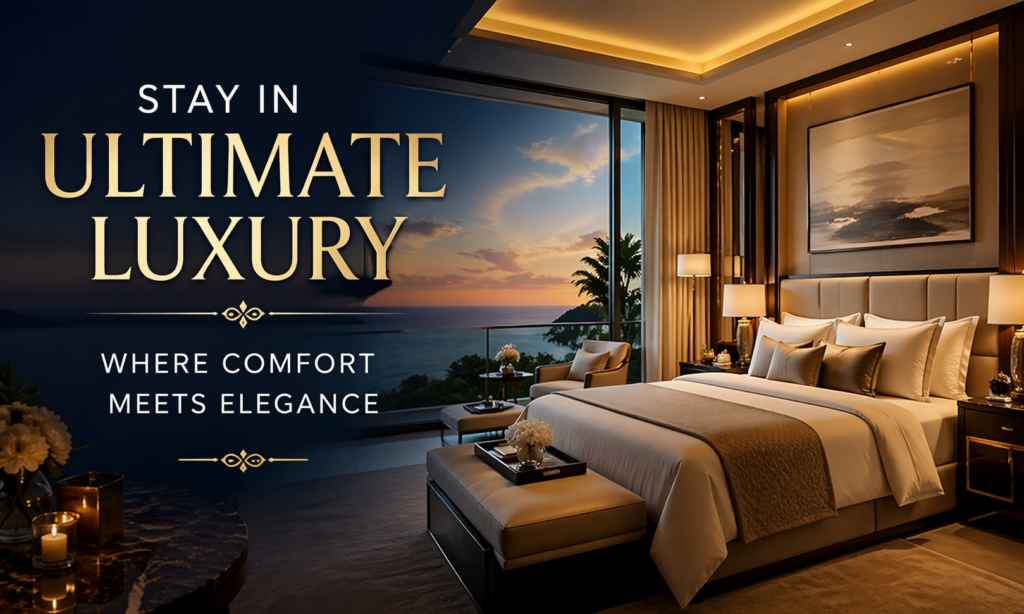
That shift matters because people are no longer judging a hotel by marble floors alone. They are asking different questions now. Will this property help me rest better? That the service feel natural instead of robotic? Will the design calm my mind the second I walk in? Can the stay feel private and polished without feeling stiff? In other words, today’s luxury travel is not just about expensive surroundings. It is about emotional ease. It is about walking into a space that anticipates what you need before you ask for it. When comfort and elegance truly come together, the hotel stops feeling like a place to sleep and starts feeling like the destination itself. That is exactly why the phrase “Stay in Ultimate Luxury – Where Comfort Meets Elegance” resonates so strongly in the current hospitality landscape.
What Ultimate Luxury Really Means Today
Modern luxury accommodation has moved beyond old-school status symbols. Yes, travelers still notice the details: fine linens, curated lighting, oversized tubs, attentive concierge service, and beautifully plated dining. But the real marker of ultimate luxury today is how the experience makes you feel. McKinsey’s interviews with luxury travel leaders highlight this perfectly. The differentiator is not simply price or even product. It is the emotional outcome. One of the clearest ideas from that research is that real luxury comes from being understood deeply and served thoughtfully, not from being surrounded by obvious extravagance alone. That is a useful lens because it explains why some five-star properties feel unforgettable while others feel visually impressive but strangely cold.
Comfort, in that context, is also bigger than convenience. It is not just a soft mattress or a quiet room, although both matter a lot. It is the comfort of not needing to solve problems during your stay. That is a check-in experience that takes seconds instead of creating stress. It is a room layout that feels intuitive. It is the right pillow, the right room temperature, the right breakfast timing, the right level of privacy, and the right staff tone. Elegance, meanwhile, has become subtler and smarter. It is reflected in restraint, balance, and precision. The best luxury hotels do not scream for attention. They communicate taste through textures, scent, acoustics, service choreography, and atmosphere. They make elegance feel lived-in rather than staged. That is where the modern guest sees value: not in loud opulence, but in thoughtful excellence woven into every moment.
The Core Elements of a True Luxury Stay
A genuine luxury hotel experience usually rests on three pillars: exceptional design, intuitive service, and meaningful privacy. Design creates the first emotional signal. The moment you enter a beautifully planned lobby or suite, your body reads the space before your mind does. Warm natural materials, art with local character, generous spacing, soft acoustics, and flattering lighting all shape that instant impression. Great design in a luxury property is not decoration for decoration’s sake. It is emotional engineering. It tells you that every inch has been considered. That kind of environment lowers stress and raises expectation at the same time, which is exactly what a premium stay should do.
Service is the second pillar, and this is where many hotels either win big or quietly fail. McKinsey notes that as nonluxury properties improve their physical offerings, the gap increasingly comes down to distinctive, superior service. That matters because hardware can be copied. A rainfall shower, plush robe, or stylish minibar can be installed anywhere.
The third pillar is privacy, which has become more valuable in an overstimulated world. Today’s traveler is surrounded by noise, alerts, meetings, and social obligations. A luxury hotel therefore sells more than a room; it sells protected mental space. McKinsey’s luxury travel analysis points out rising interest in villas, multigenerational travel, and properties that balance exclusivity with brand trust. That tells us privacy is no longer a niche preference. It is central to how many travelers define quality. Guests want a stay where they can disconnect without sacrificing standards. They want peace, but not inconvenience. They want seclusion, but not isolation. That is why the strongest premium hospitality brands combine private environments with reliable service systems, allowing guests to feel cocooned without feeling cut off.
Where Comfort Meets Elegance in the Guest Experience
The phrase “where comfort meets elegance” becomes real in the guest journey, not just in marketing copy. It starts in the room. A luxury room is not truly luxurious because it is large. It is luxurious because it is resolved. Everything has a purpose. The bed feels restorative rather than merely soft. The seating invites lingering. The bathroom feels like a retreat rather than an afterthought. Sound insulation helps the mind settle. Lighting works at every hour, whether you are arriving from a red-eye flight or winding down after dinner. Hotels such as The St. Regis Jakarta emphasize features like a signature butler service, multiple dining venues, spa experiences, and room design rooted in local identity, showing how today’s best properties blend comfort, service, and cultural polish rather than relying on one-dimensional glamor.
That experience extends beyond the room into dining, wellness, and public spaces. The modern luxury guest wants atmosphere with ease. A breakfast room should feel refined but not tense. A spa should feel restorative, not performative. A bar should feel elegant without becoming inaccessible. This balance is exactly why wellness has become so intertwined with luxury hospitality.
Technology also plays a bigger role than many people realize, but the best luxury technology barely announces itself. It should remove friction, not add novelty for its own sake. Hilton’s recent trend reporting notes the growth of digitally connected rooms and the widespread use of in-room entertainment and wellness streaming. That points toward a clear takeaway: modern guests appreciate digital convenience when it serves comfort. Mobile access, seamless streaming, smart controls, and quiet personalization tools all matter, but only when they feel invisible. A guest should never feel like they are operating a spaceship just to dim the lights. Real elegance in technology means the system disappears into the experience.
Why Modern Travelers Choose Luxury Hotels (Stay in Ultimate Luxury)
The current demand for luxury stays is not random. It is connected to how people now think about time, energy, and value. Travelers are increasingly protecting their downtime rather than simply filling it. Hilton reported that two-thirds of Americans sleep better in hotels, while two in five travelers choose hotels where they believe they can get better sleep. That may sound small at first, but it reveals something bigger. Rest itself has become aspirational. Sleep is now part of travel decision-making. That means luxury hotels are not just competing on views, dining, and prestige. They are competing on recovery, regulation, and wellness. The best ones understand this and design their rooms and services around it.
Another reason people choose luxury is that travel has become more layered. McKinsey found that 80% of the luxury leisure market is made up of travelers under 60, and that multigenerational travel is a growing pattern. These are not all retirees chasing old-fashioned glamour. They include families, working professionals, experience collectors, and travelers mixing rest with identity-driven exploration.
This helps explain why brand trust has become so powerful in premium hospitality. Travelers want character, but they also want reassurance. They may be eager to explore a new city, a remote island, or a mountain retreat, yet they still want the stay to feel polished, safe, and expertly managed. That is why upscale brands and well-run independents with strong reputations continue to perform so well. Luxury does not eliminate risk entirely, but it reduces the number of compromises a traveler expects to make. You are not simply paying for beautiful surroundings. You are paying for fewer uncertainties, fewer disappointments, and a greater chance that the entire trip will feel elevated from start to finish.
How to Choose the Right Luxury Hotel (Stay in Ultimate Luxury)
Not every five-star label delivers the same kind of experience, so choosing the right luxury hotel requires a sharper eye than most booking pages encourage. The first thing to examine is location and sense of place. A true luxury property should not feel generic. It should reflect something about where you are, whether through architecture, cuisine, materials, art, or ritual. Accor’s Banyan Tree brand, for example, explicitly frames its luxury experience around authenticity, local culture, personalization, and care for the planet. That is a useful benchmark because it shows that modern luxury is increasingly tied to immersion, not just insulation. Guests want to feel protected and pampered, yes, but they also want to feel connected to the destination in a meaningful way.
The second factor is service philosophy. Some luxury hotels are formal and ceremonial. Others are warm, contemporary, and discreet. Neither is automatically better. What matters is consistency. Does the property actually live its service promise? Is the staff known for anticipating needs?
The third factor is how the hotel approaches value and sustainability. Value in luxury is not the same as low price. It is about return on emotional and practical experience. A higher nightly rate may make perfect sense if the stay saves time, improves sleep, deepens the trip, and reduces stress. Sustainability also matters more now, especially for travelers who do not want indulgence to come at the expense of responsibility. Sofitel states that 72% of its hotels were eco-certified by the end of 2025, while Marriott continues to frame sustainability and social impact as a core part of its hospitality strategy. Those signals matter because they show the market is moving toward a model where sustainable luxury is not a contradiction. It is becoming an expectation.
Luxury Hospitality Trends Shaping the Future (Stay in Ultimate Luxury)
A few major trends are defining what ultimate luxury travel will look like from here. The first is wellness-centered stays. This is no longer limited to spa menus and yoga decks. It now includes sleep experiences, nutrition, quiet design, movement, mental reset, and personalized health programming. McKinsey identifies wellness as a major global driver for luxury travelers, while Hilton and Sofitel both point to growing guest interest in better rest, restorative environments, and more individualized wellbeing offerings. The luxury hotel of the future will increasingly look like a hybrid between a sanctuary, a residence, and a destination.
The third trend is what you might call high-touch service at scale. McKinsey notes that while around 70% of current luxury-hotel properties are independent, the future pipeline is heavily tilted toward chains and franchises, which account for 78% of planned hotels in the luxury pipeline. That creates a challenge and an opportunity. Can a large brand feel personal? Can scale coexist with intimacy? The winning hotels will be the ones that answer yes. They will use training, data, and thoughtful design to make each stay feel individual, even inside a global brand system. That balancing act may define the future of luxury hospitality more than any chandelier or penthouse ever could.
Luxury Hotel Comparison: What Guests Value Most (Stay in Ultimate Luxury)
| Luxury Stay Element | Why It Matters | What Great Hotels Do |
|---|---|---|
| Personalized service | Makes guests feel understood, not processed | Remember preferences, anticipate needs, tailor interactions |
| Sleep and wellness | Supports recovery and emotional wellbeing | Quiet rooms, wellness programs, sleep-focused design |
| Sense of place | Turns a hotel into part of the destination | Use local culture, materials, cuisine, and storytelling |
| Seamless technology | Reduces stress and friction | Mobile access, intuitive controls, connected-room features |
| Sustainability | Aligns luxury with responsible travel values | Eco-certifications, smart operations, thoughtful sourcing |
| Privacy and space | Gives guests calm in a noisy world | Villas, spacious layouts, private amenities, discreet service |
Conclusion (Stay in Ultimate Luxury)
A remarkable luxury hotel experience is never just about looking expensive. It is about feeling deeply cared for in a space that restores your energy and sharpens your sense of place. That is why the strongest luxury stays are built on more than aesthetics. They combine thoughtful design, intuitive service, wellness, privacy, and emotional ease into one seamless experience. Current travel and hospitality data makes it clear that this is not a passing preference. Luxury demand remains strong, travelers are prioritizing sleep and wellbeing, and the market is rewarding hotels that blend elegance with personalization, authenticity, and responsibility.